
This project was carried out by a team of 2 UX design Master's students as part of our UXD2 course at the University of Technology of Compiègne, during the autumn semester of 2025. The objective was to design a science mediation device addressing a real user need, combining both a physical prototype and a digital interface.
Transitioning to independent living is an exciting milestone for many students, yet it often brings a hidden, everyday risk : the mismanagement of food safety. Between forgotten leftovers, meals left cooling for too long on the counter, and the unreliable "sniff test," the excitement of first-time cooking can quickly turn into the panic of food poisoning.
“Panique dans la cuisine” (Panic in the Kitchen) is a hybrid science mediation device created to tackle this commonly overlooked topic. Designed to support young adults cooking on their own for the first time, the project combines a physical board game with a digital application to teach hygiene reflexes in a memorable way.
The goal is simple : transform complex scientific guidelines into clear, concrete, and lasting knowledge, helping reduce the risk of foodborne illness.
The project originated from a simple observation drawn from our daily lives and those around us : the uncertain management of leftovers, often forgotten outside the fridge or kept for too long out of fear of waste. We quickly identified a tension between the desire to eat well and a lack of awareness of the real health risks linked to domestic food storage.
To refine our focus, we conducted an exploratory research phase using multiple methods. An online survey collected 53 responses from UTC students, helping us understand their knowledge, habits, and uncertainties regarding food hygiene. This quantitative data was complemented by eight semi-structured interviews.
From this research, two personas emerged :

Paul

Juliette
For both, the device needed to act as a reliable and accessible guide, capable of extending learning beyond the gameplay session. To further illustrate the issue, we designed user journey maps tracing the progression of a foodborne illness, which showed how a simple meal can gradually turn into a serious health risk, often without the user realizing it.
This phase led us to focus specifically on food preservation as a key factor in limiting bacterial growth. We naturally moved toward a game format, an ideal mediation tool to engage diverse audiences during events such as science festivals. Our early concepts included augmented reality to reveal the invisible, and a detective-style game centered around identifying a “guilty” food item. While promising at first, we found that our ideas quickly came to a dead end whenever we tried to push them further in order to make a functional, educational game out of them. At this stage, we felt somewhat lost and unsure about how to make our experience both playable and useful.
The turning point
The real turning point came through discussions with two food science professionals teaching at our Univerity. Their expertise introduced us to a robust and globally recognized framework : the World Health Organization’s Five Keys to Safer Food.
This pivot allowed us to completely restructure the game around five clear pillars :
Keep clean;
Separate raw and cooked;
Cook thoroughly;
Keep food at safe temperatures;
Use safe water and raw materials.
In order to make these concepts engaging, we adopted mechanics inspired by games such as Trivial Pursuit and Mario Party, such as a progressive collection system and random positive/negative luck events.
To translate this scientific framework into a tangible experience, we structured our approach around several key design dimensions. This multidimensional framework ensured that no aspect of the user experience was overlooked, balancing educational rigor with playfulness. The final system is built around six dimensions: material, interactive, narrative, aesthetic, playful, and pedagogical.
We defined a user flow centered on a complete game turn, allowing us to structure interfaces coherently. In parallel, we developed a clear information architecture to distinguish the roles of each medium. One of our challenges was to ensure the app was not perceived as a mere technological gadget, but as an essential and functional complement to the physical board.
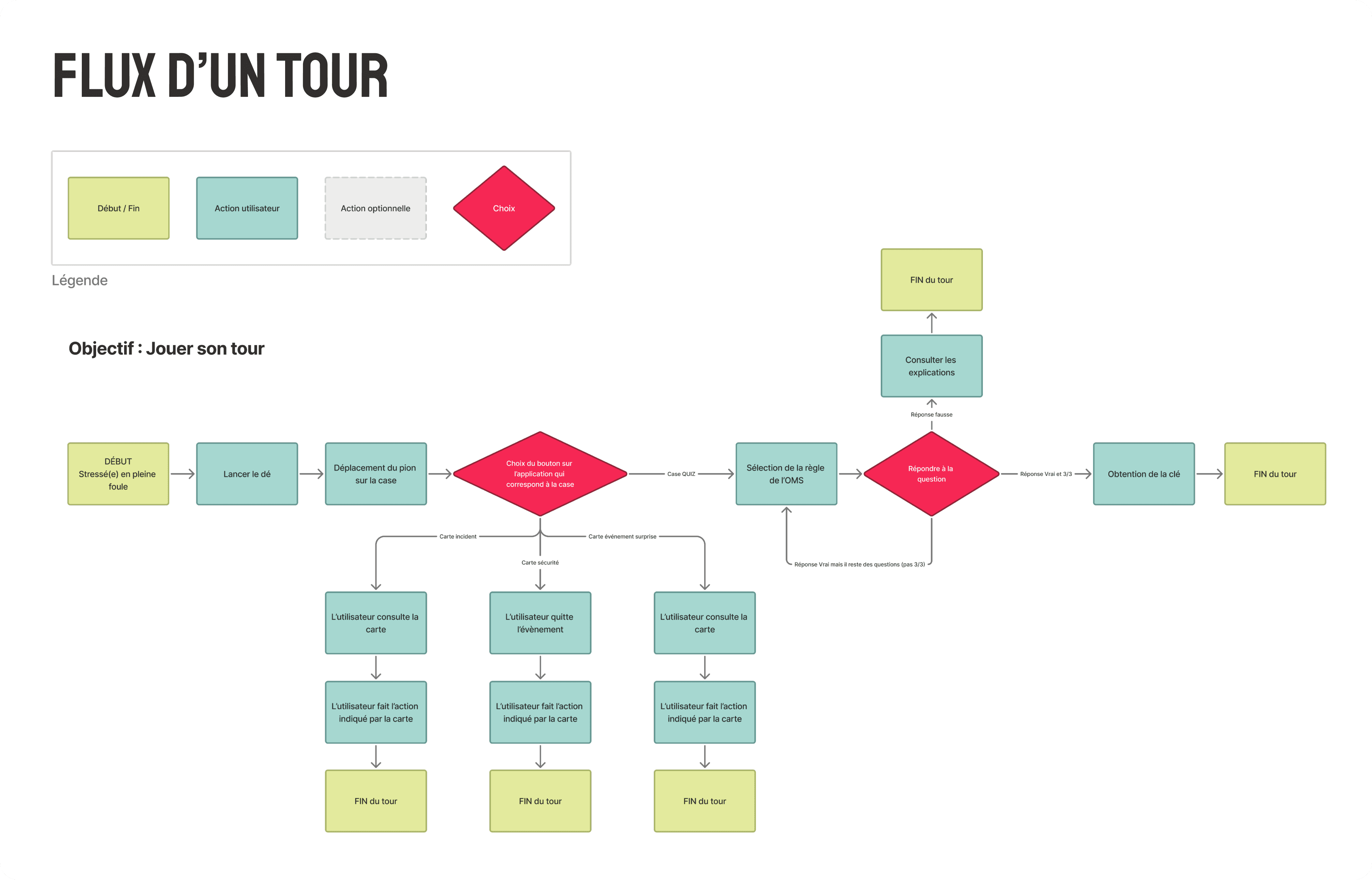
User flow
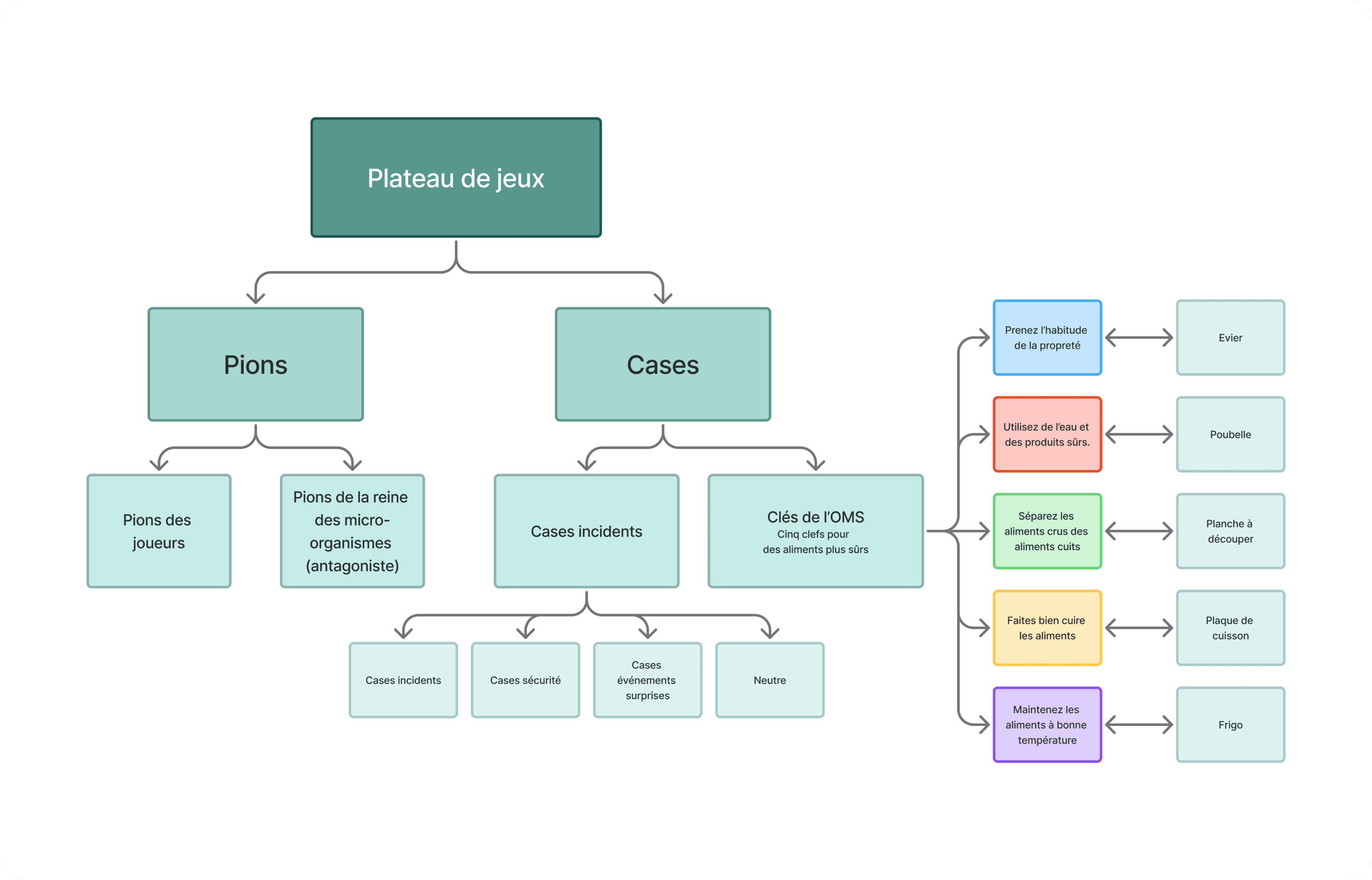
Information architecture
The project went through multiple testing and iteration cycles in order to validate our design choices up to this point.
The first tests relied on a rudimentary prototype : a paper game board and a simple interface generated with the help of Claude AI. These sessions confirmed the concept’s potential, but also revealed several issues : weak narrative, unbalanced gameplay, and poorly structured pedagogical content.
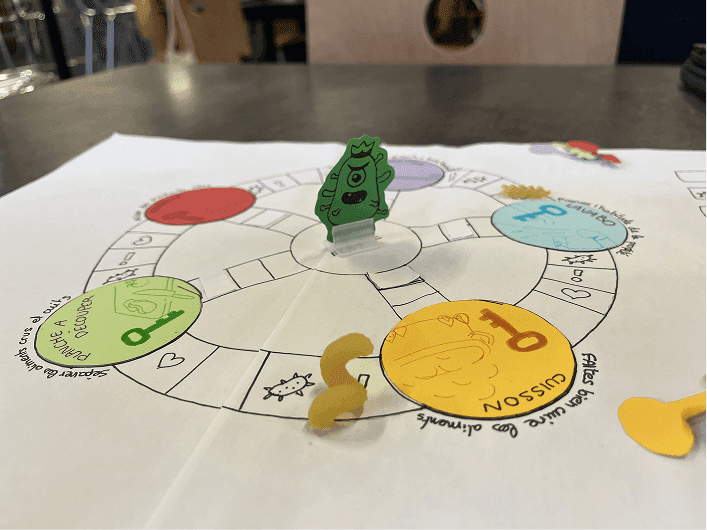
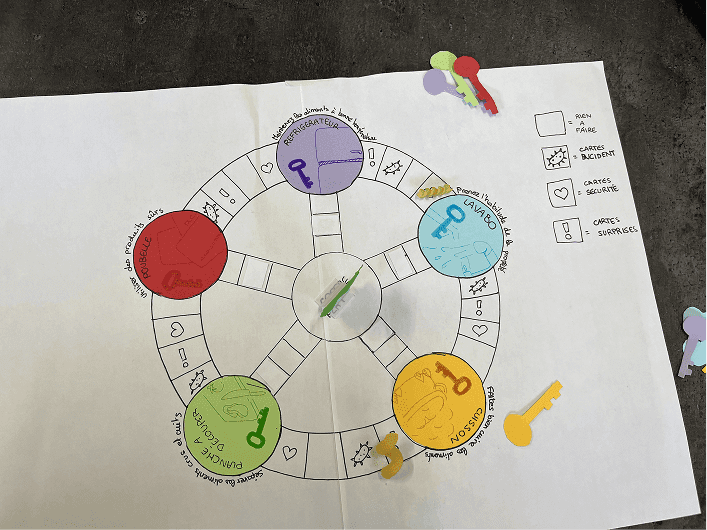
First iteration
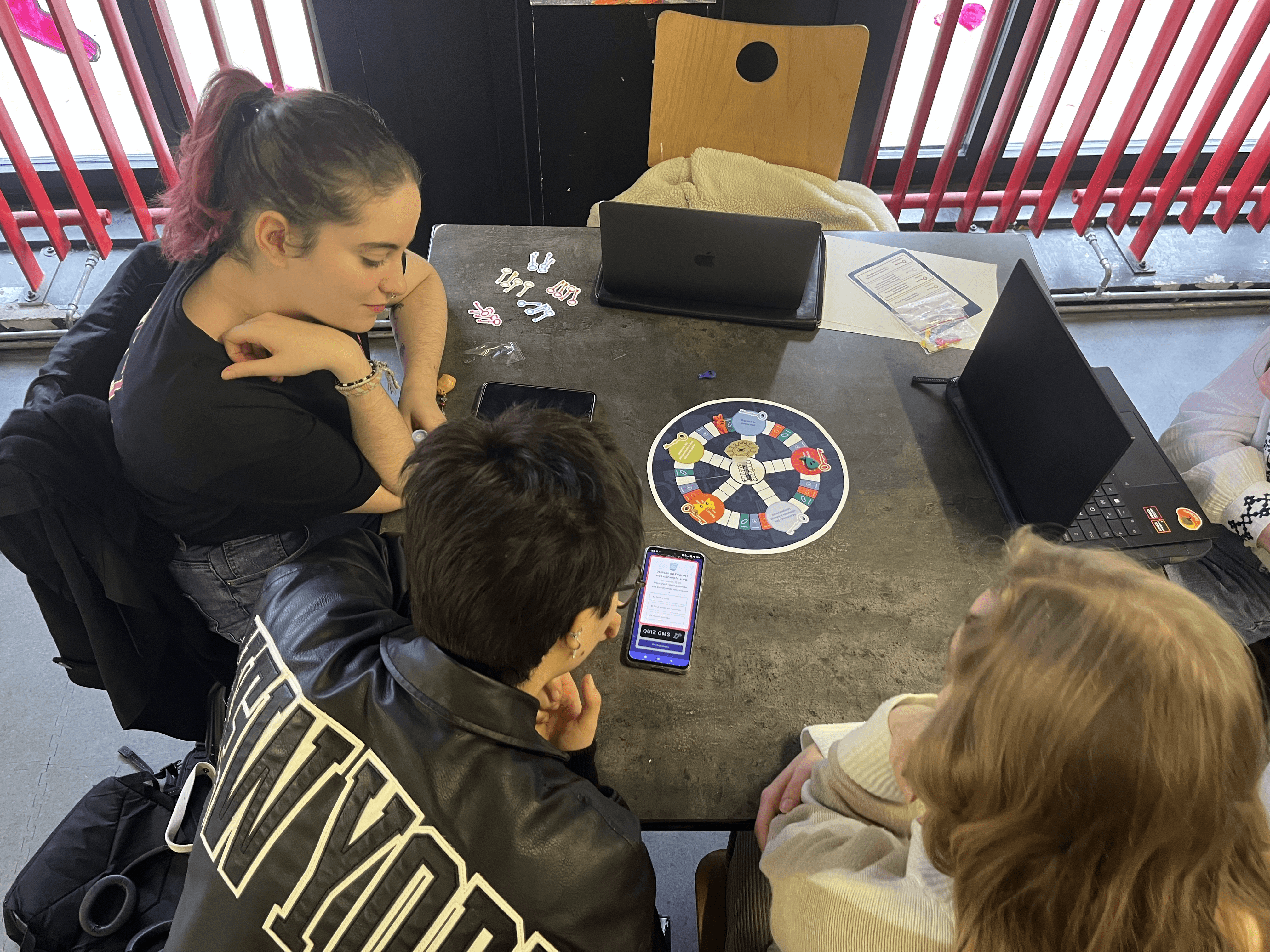
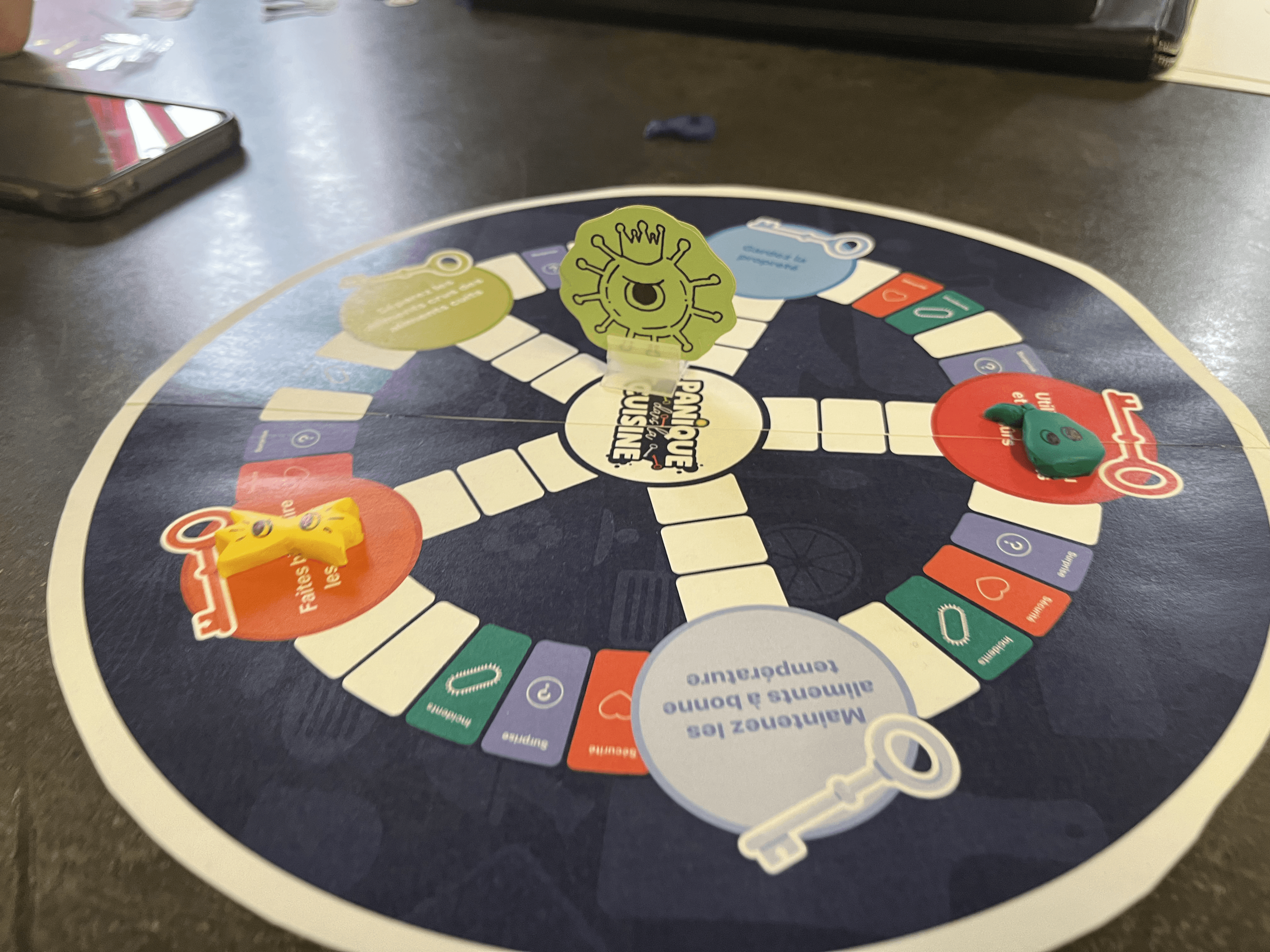
In a second iteration, we strengthened immersion by adding music and voice acting for the antagonist, while improving the board’s visual design. This is also when the idea of a take-home magnet emerged, extending the experience beyond gameplay. However, further testing revealed new friction points : visual accessibility issues, cognitive overload, and gameplay imbalance when player movement was too unrestricted.
Second iteration
Panic in the Kitchen takes the form of a hybrid board game, where physical components and digital interface interact to break the monotony of theoretical learning. The system transforms WHO guidelines into a lived experience, enabling users to develop essential hygiene reflexes through an engaging and interactive simulation that supports long-term memorisation.
App screens
Physical board design
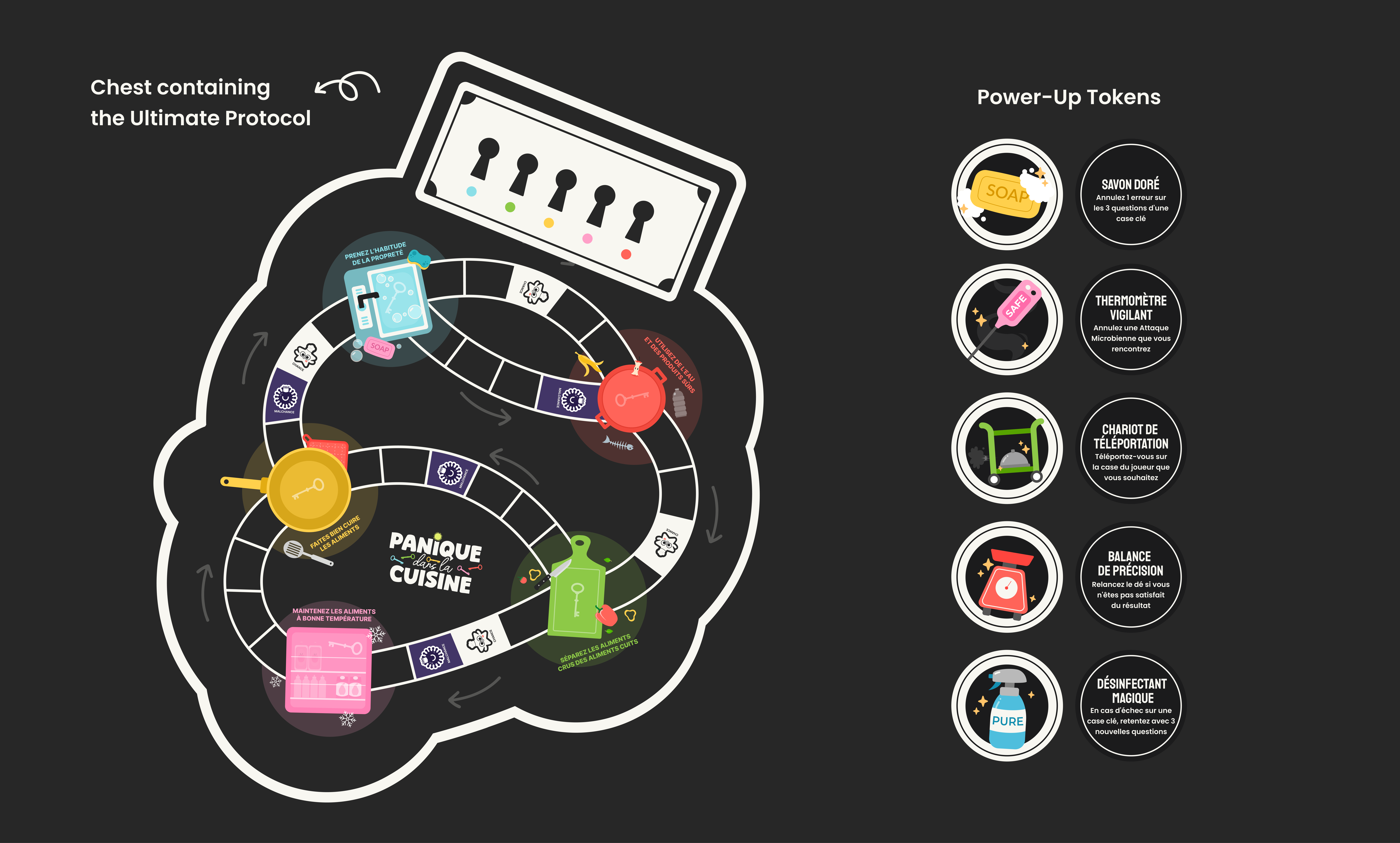
At the core of the game is a circular board representing a stylised kitchen, divided into five strategic zones : the sink (linked to hygiene), the cutting board (cross-contamination), the stove (cooking), the refrigerator (storage), and the trash (product safety). We started by designing the board digitally, then constructed a physical prototype using cardboard, printed paper, and polymer clay. We also created custom game pieces representing food items, alongside physical keys for each WHO category to materialise the player's progress .
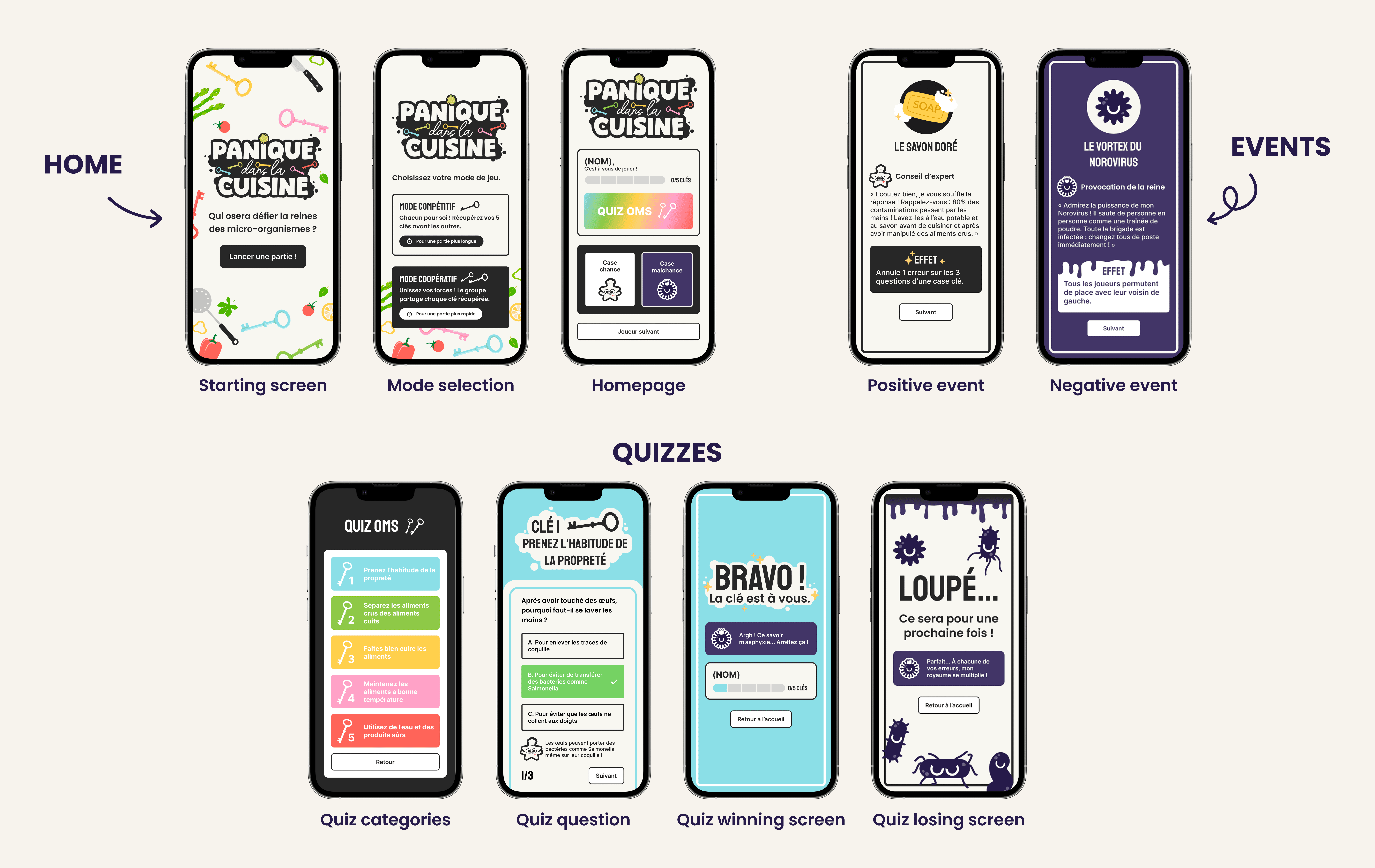
The mobile application acts as the system’s “brain,” handling dice rolls, event cards, and quiz triggers, while ensuring a smooth progression of threats across the board. Players advance by collecting physical keys linked to each zone, materialising their growing mastery of hygiene rules through a rewarding progression system.
The experience is driven by a strong narrative : players must cooperate or compete to defeat the Queen of Micro-organisms, an omnipresent antagonist embodying invisible health risks. The ultimate goal is to free the WHO Expert, held captive by the Queen, by proving scientific knowledge through challenges delivered by the app. Landing on event boxes triggers real-time narrative beats :
"Misfortune" boxes trigger a negative event, like E. coli Paralysis that restricts player movement ;
"Chance" boxes trigger a positive event that allows players to gain object tokens, such as the Golden Soap that allows players a second chance at answering a quiz question. These act as power-ups that can be held in a player's inventory and used at any moment to strategically influence the game.
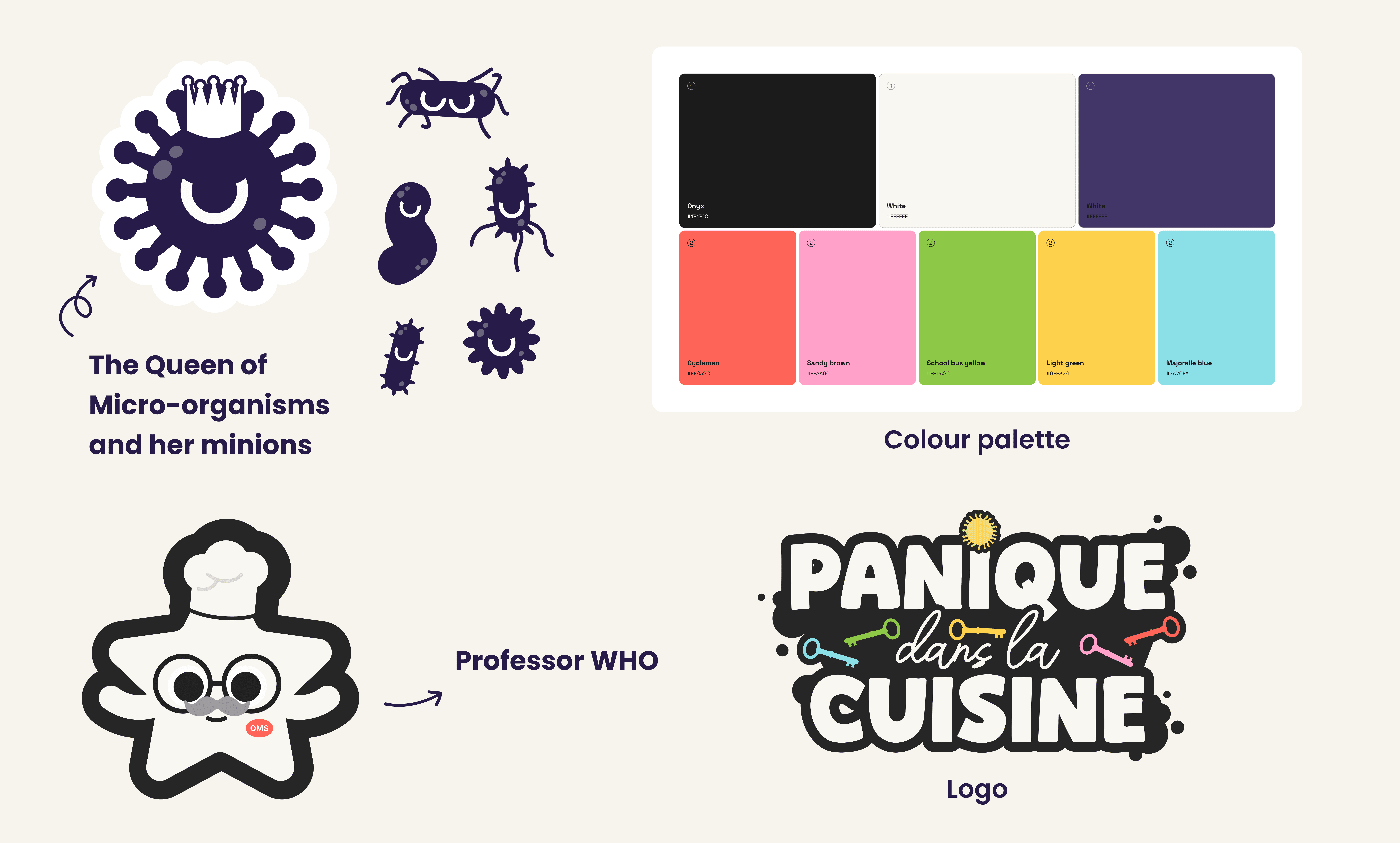
Visual identity & narration design elements
The educational content is rigorously grounded in the WHO’s five keys, each zone requiring three consecutive correct answers to complete, reinforcing learning through repetition.
In order to extend impact beyond gameplay, we designed a take-home magnet (integrated in the narration as the “ultimate safety protocol”) that players win at the end of the game and can place on their fridge. This tangible artifact becomes a daily reminder, embedding good practices directly where decisions happen : in the kitchen.
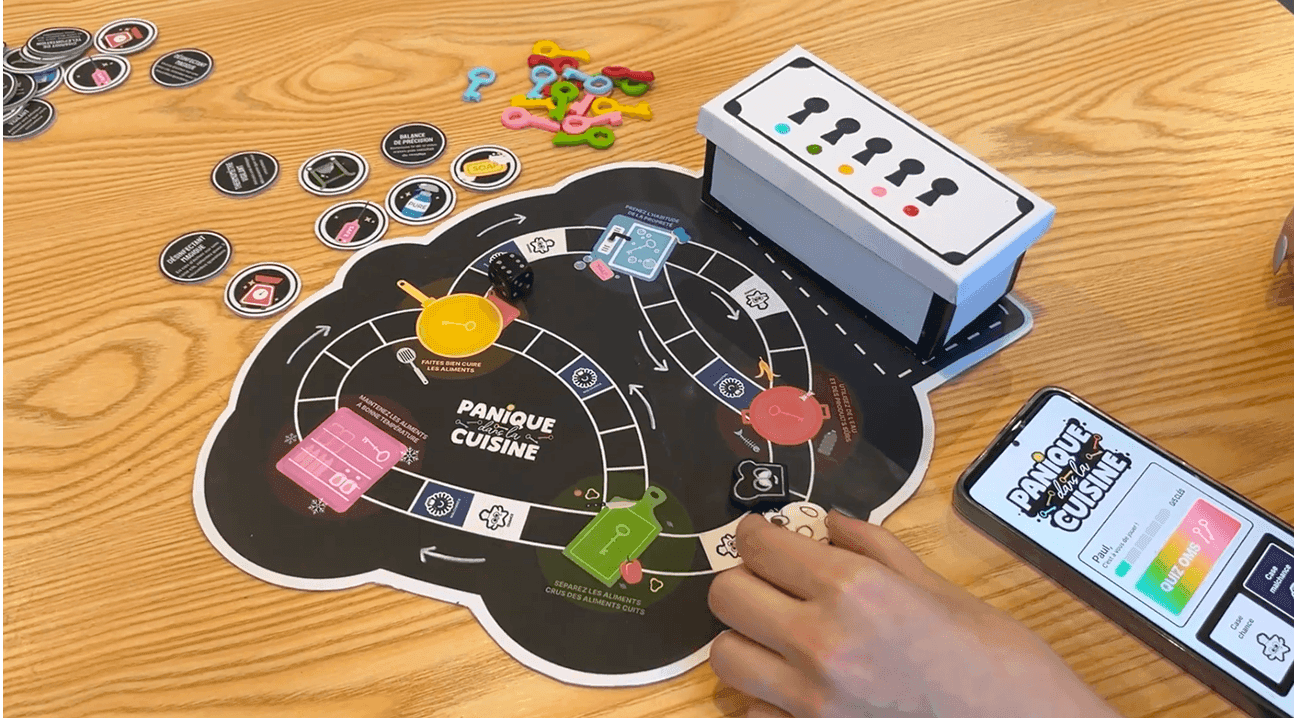
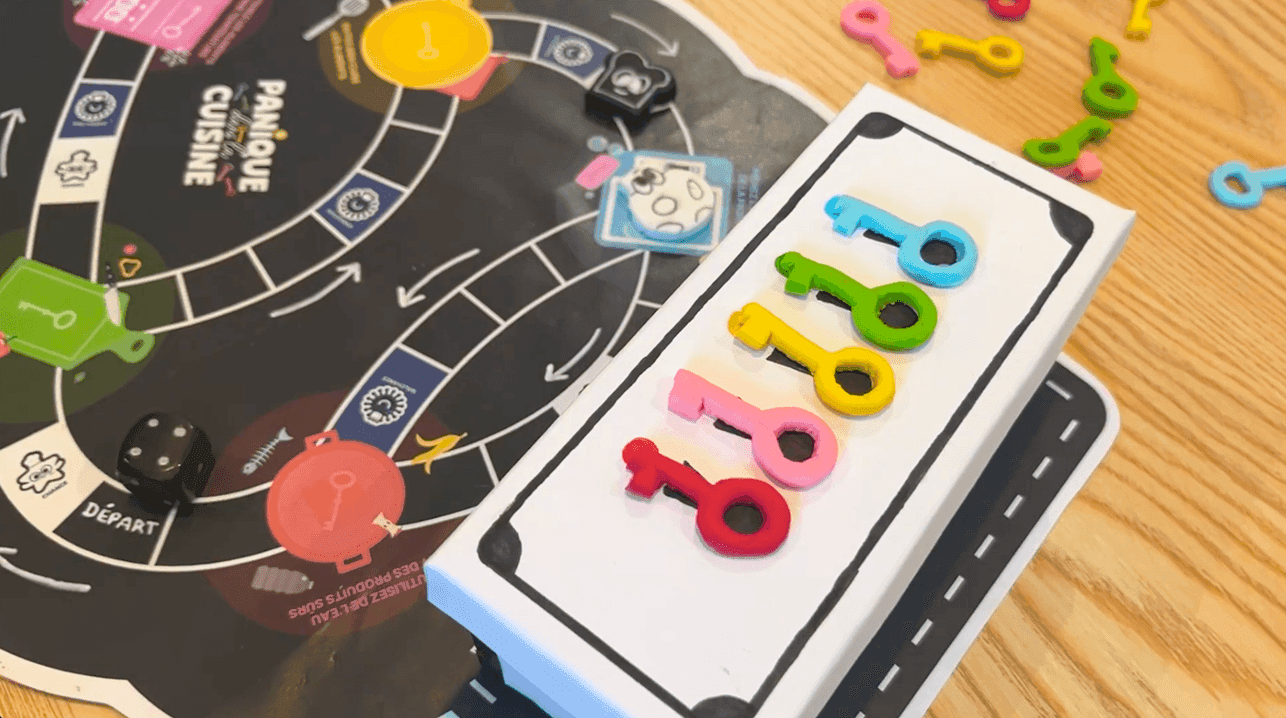
Our project in action
Interested in seeing how the game mechanics I described actually play out ?
Check out our presentation video !
Accessibility was a primary focus throughout our design process to ensure the game remained inclusive for everyone. First, we carefully optimised the colour palette through colourblindness testing to guarantee legibility across various visual profiles. To facilitate instant recognition during the heat of the game, we implemented a multimodal system where each safety pillar is identified by a unique combination of colour, icon, and text. This is further supported by a "cartoon" art style and an immersive sound design, which allow us to tackle serious health risks with a balanced blend of clarity and humour, making the experience engaging for users of all ages.
Ultimately, this project served as a lesson in balancing pedagogical ambition with game design. Our main challenge was integrating scientific rigor without overloading the experience, ensuring learning remained fluid and intuitive. In a real deployment context such as a science festival, we would prioritise a tablet interface for easier on-site interaction, along with a facilitator to enrich discussions with participants. The game’s cooperative and competitive modes were designed to offer flexibility, allowing users to adapt their experience based on their time and availability.
Throughout this project, I was able to strengthen my ability to translate dense scientific knowledge into a fluid and engaging user experience, one that successfully balances rigour with play.