
This project was part of the ICX6 course at the University of Technology of Compiègne. Over the course of 4 months, our group of four was tasked with redesigning an existing website by following weekly deliverables, from audits to wireframes to a tested prototype.
Amazon Handmade is meant to showcase unique, artisanal products. Yet for many users, the platform feels indistinguishable from mass e-commerce : filters are limited, personalisation is misleading, and artisans remain invisible. Our semester-long project reimagined Amazon Handmade with the goal of bringing back authenticity, clarity, and joy in discovery.
Following the Double Diamond process, we combined benchmarks, UX audits, persona-based journeys, and guerrilla testing to suggest a redesign. Our solution improves search with meaningful filters, highlights regional provenance, and ensures that “customisable” truly means customisable. Testing confirmed the value of clearer artisan visibility, though challenges around affordance and intuitive personalisation remain.
Highlight artisan identity
Connect buyers with local and artisanal production
Increase confidence in purchase
Maximise filtering and personnalisation options
Avoiding a generic, modern e-commerce feel
Balancing accessibility and clarity with whimsy and creativity
Preventing feature and cognitive overload
UX auditing and benchmarking
Persona and user journeys
Wireframing and prototyping
UI and style kit
Guerilla testing
Our team chose to redesign Amazon Handmade, attracted by its promise of supporting artisans but struck by how profoundly confusing and impersonal the actual experience was. This tension between intention and execution became the starting point for our research.
We began by conducting a benchmark that compared Amazon Handmade with competitors such as Etsy and smaller artisan-focused sites. While Amazon excelled in speed and core functionalities, it lacked the dedicated categories, storytelling, and precise filters that make artisan platforms feel authentic.
To deepen our understanding, we carried out a UX audit using Nielsen’s heuristics, revealing several pain points.
Navigation was overloaded, with menus and cards constantly changing. Calls to action were often misleading, especially when customisation options did not match user expectations. Product information was inconsistent, with excessively long titles and missing details. Accessibility also suffered due to hidden menus and cluttered visuals.
From these insights, we developed a persona : Caroline Martin, who uses Amazon for mass-produced items but turns to Etsy when she wants handmade goods.
We then mapped her user journey on Amazon Handmade, tracing every step from the initial idea to the product’s customisation and delivery, in order to identify pain points throughout the experience.


To make these scenarios actionable, we translated them into a user flow focused on the task “finding a customizable artisanal product on Amazon Handmade.” This exercise made visible where navigation broke down, where expectations about customization were disappointed, and where provenance was hidden.
In parallel, we outlined a simplified information architecture that restructured categories and highlighted key attributes like handmade, customizable, and local origin. Together, these models gave us a clearer structural foundation for redesign, ensuring that our solutions would address not only aesthetics but also core navigational pain points.
Building on these insights, we defined our core design challenge as follows :
"How might we make artisanal product information on Amazon clearer and more relevant, so ethically minded users can find greater meaning in their purchases?"
We started by hand-drawing wireframes to sketch out early ideas for structure and navigation. This allowed us to test how product cards, filters, and regional provenance might fit together without being constrained by UI details. From there, we translated these sketches into Figma wireframes, progressively refining the hierarchy and clarifying key elements such as the Handmade filters, customisation options, and the breadcrumb navigation system. This stage helped us identify which information needed to be visible upfront and how to avoid clutter.
In the final step, we developed high-fidelity prototypes to test interactivity, aesthetics, and overall tone.
At this stage, the visual design played a key role : we selected a palette that felt fresh and balanced, bringing warmth and energy back into the interface. Rather than overwhelming users with corporate polish, the colours gave the platform a sense of creativity and whimsy that tied directly to its artisanal theme.
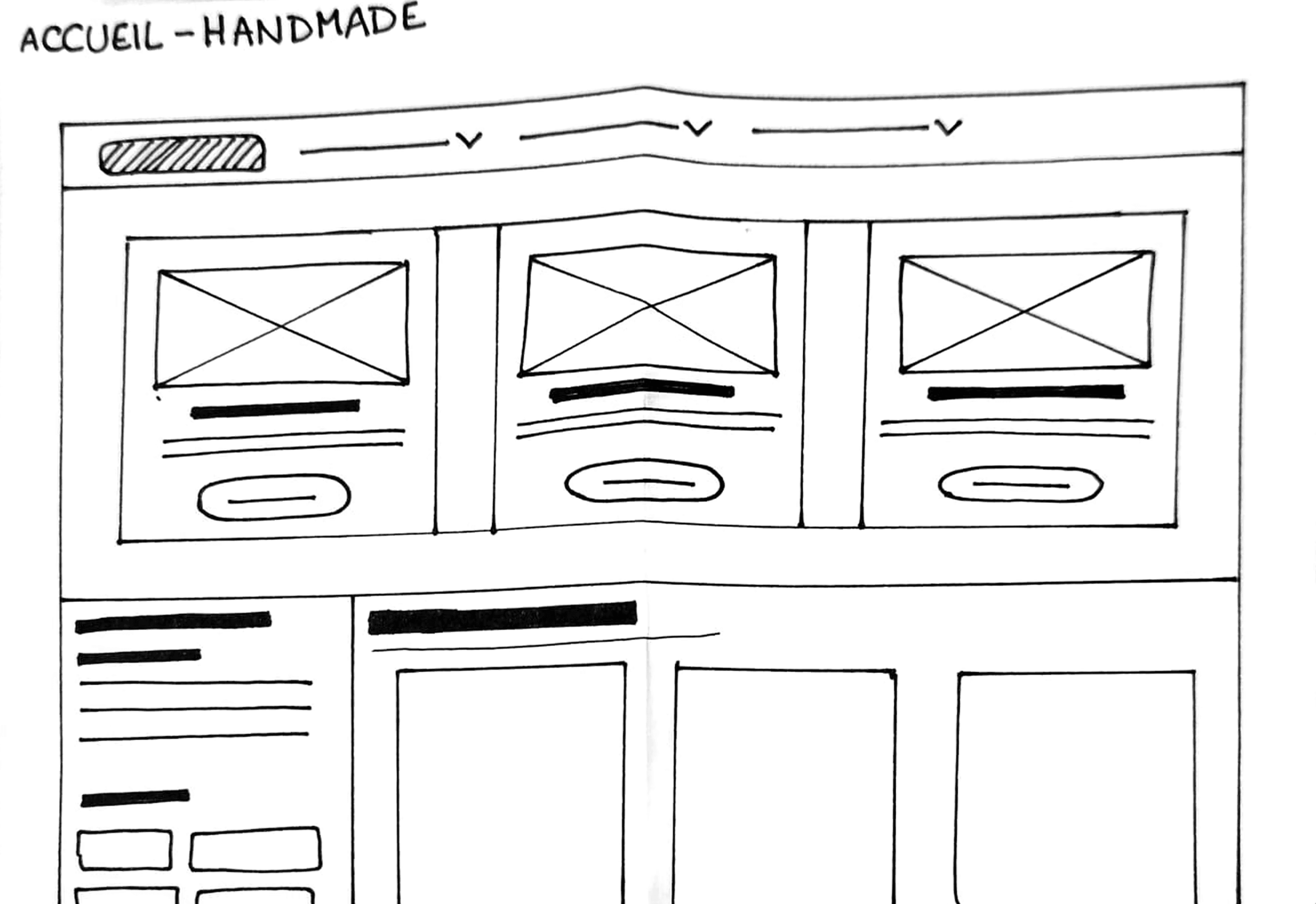
Sketch wireframes
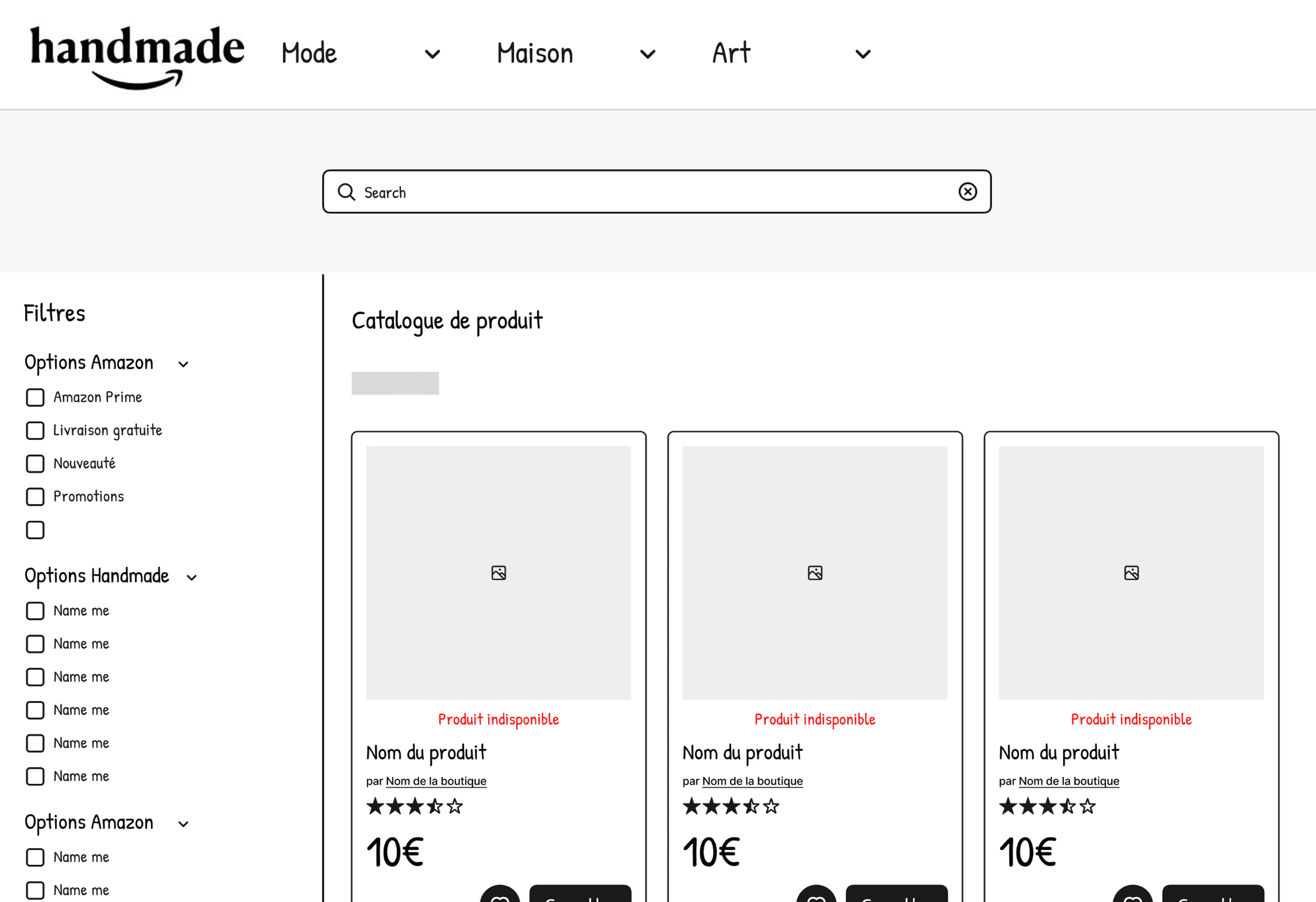
Low-fidelity wireframes
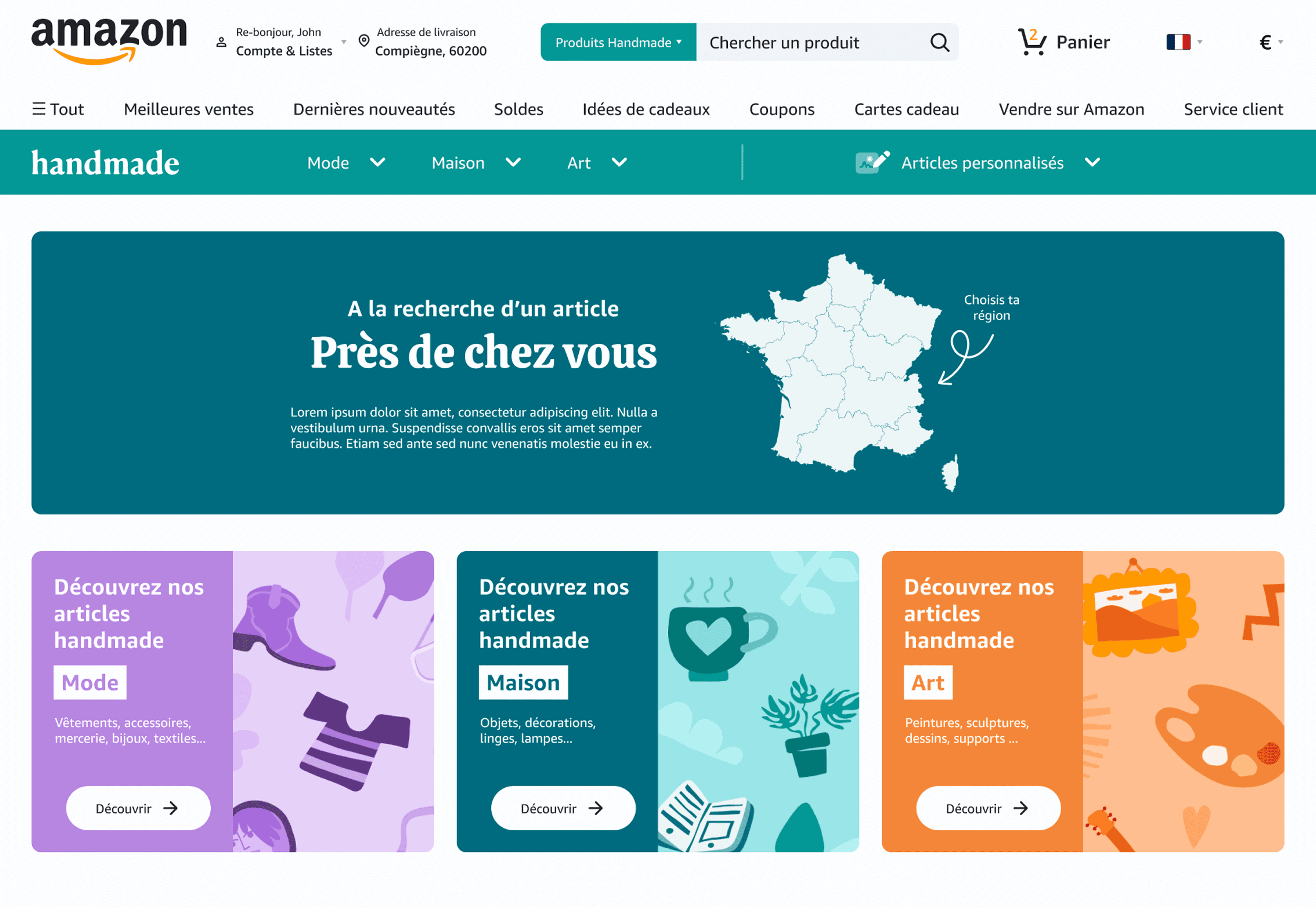
High-fidelity protoype
Throughout these iterations, we kept a guiding principle in mind : Amazon Handmade should feel light, creative, and human. Each design choice, from simplified product cards to regional discovery, was made to balance functional clarity with a touch of playful curiosity.
We also created a UI kit to ensure consistency in colors, typography, and components.
As for UX writing, we chose to keep Amazon’s professional and inclusive voice, focusing on clarity, friendliness, and transparency, particularly in relation to customization and artisan identity.
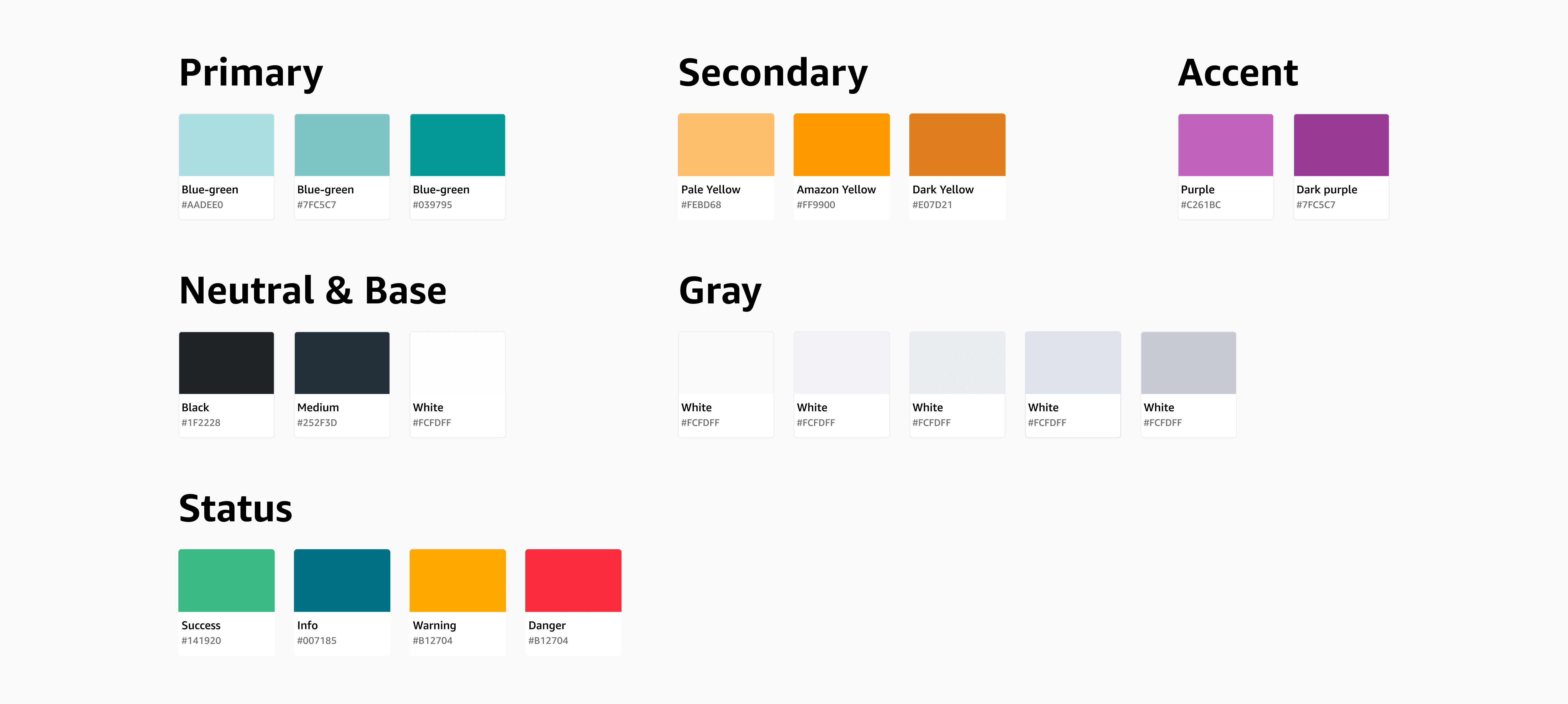
Colour palette
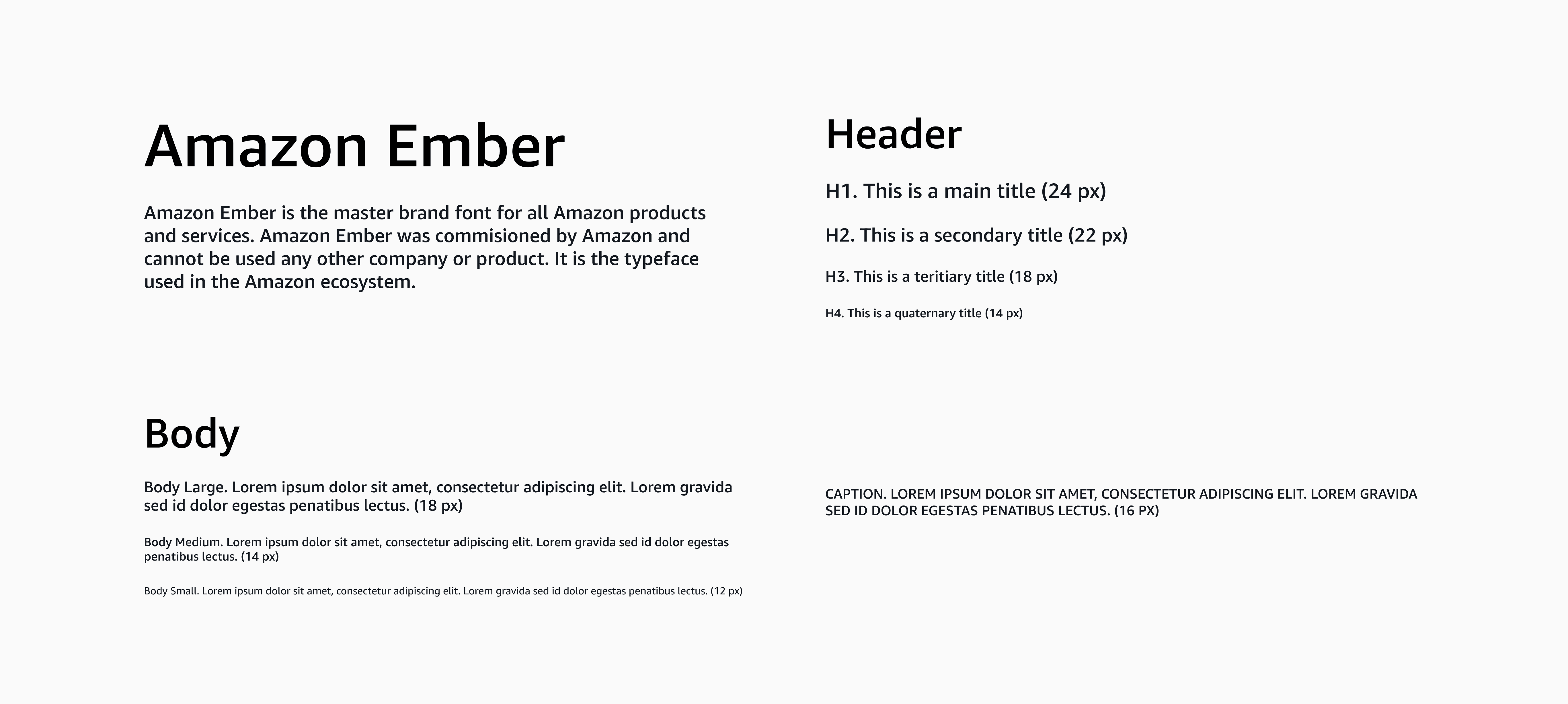
Font
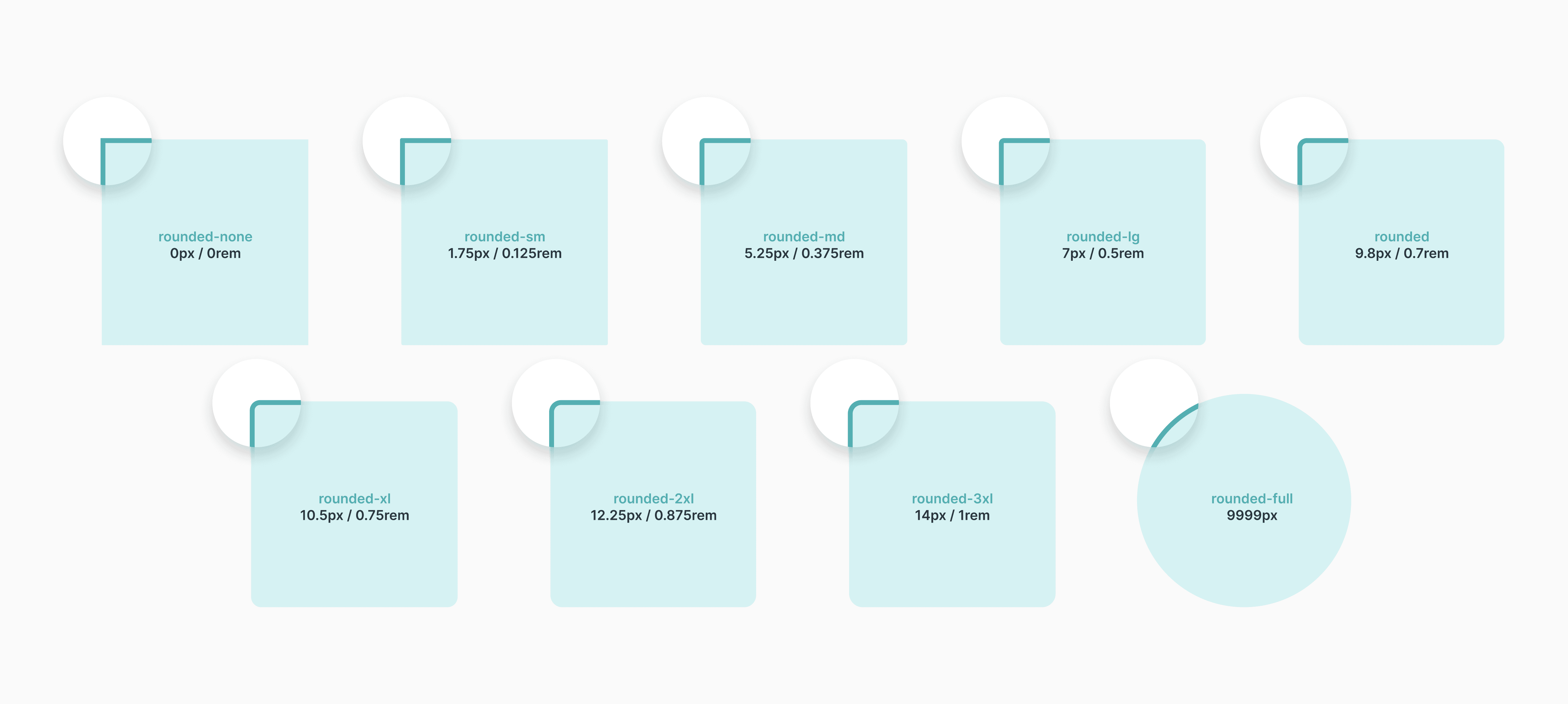
Radiuses
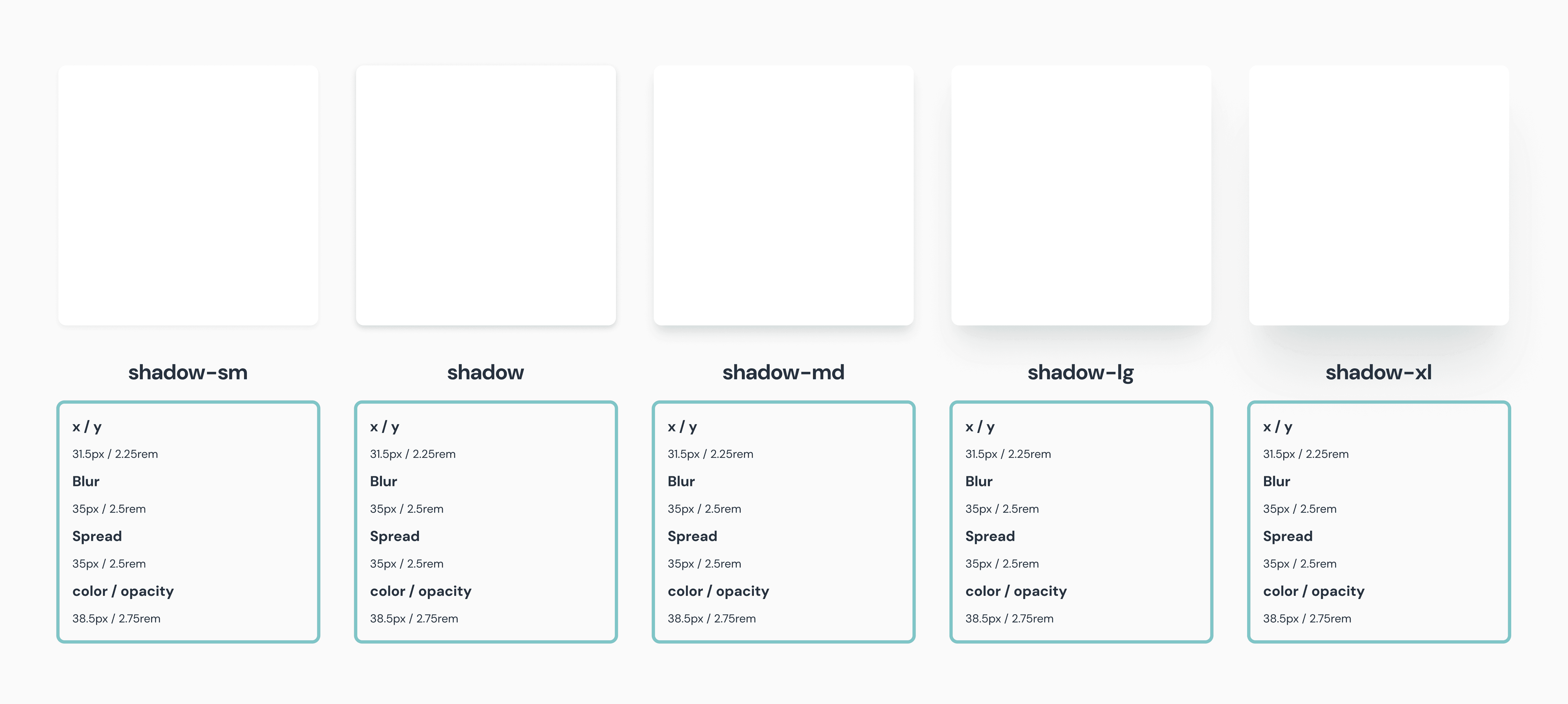
Shadows
Our redesign enables users to find and personalise handmade products with confidence.
On the homepage, regional provenance and artisan visibility are clearly highlighted.
Search and filters are intuitive, consolidated, and meaningful, with categories for different types of customisation.
Product cards are cleaner and display essential information upfront, including Handmade labels.
Customisation options are visible early in the process, with clear pathways to engraving, size, or material choices.
Finally, navigation is improved through breadcrumbs, simplified menus, and a discoverable regional map.
Together, these elements restore coherence to Amazon Handmade, making every search a discovery rather than a frustration.
In order to test our prototype, we conducted guerrilla testing with other groups within the same course. Users appreciated the clearer artisan visibility and improved aesthetics, and they found the navigation more intuitive and lighter than the original.
Nonetheless, some issues and critiques emerged during testing. We found that customisation options would benefit from real-time previews and clearer pricing, as users struggled to understand how their choices affected the final product. The clickable map of France also lacked affordance, with several participants failing to realise it was interactive. Finally, while the improved Handmade filters enhanced navigation, they were still occasionally overlooked.
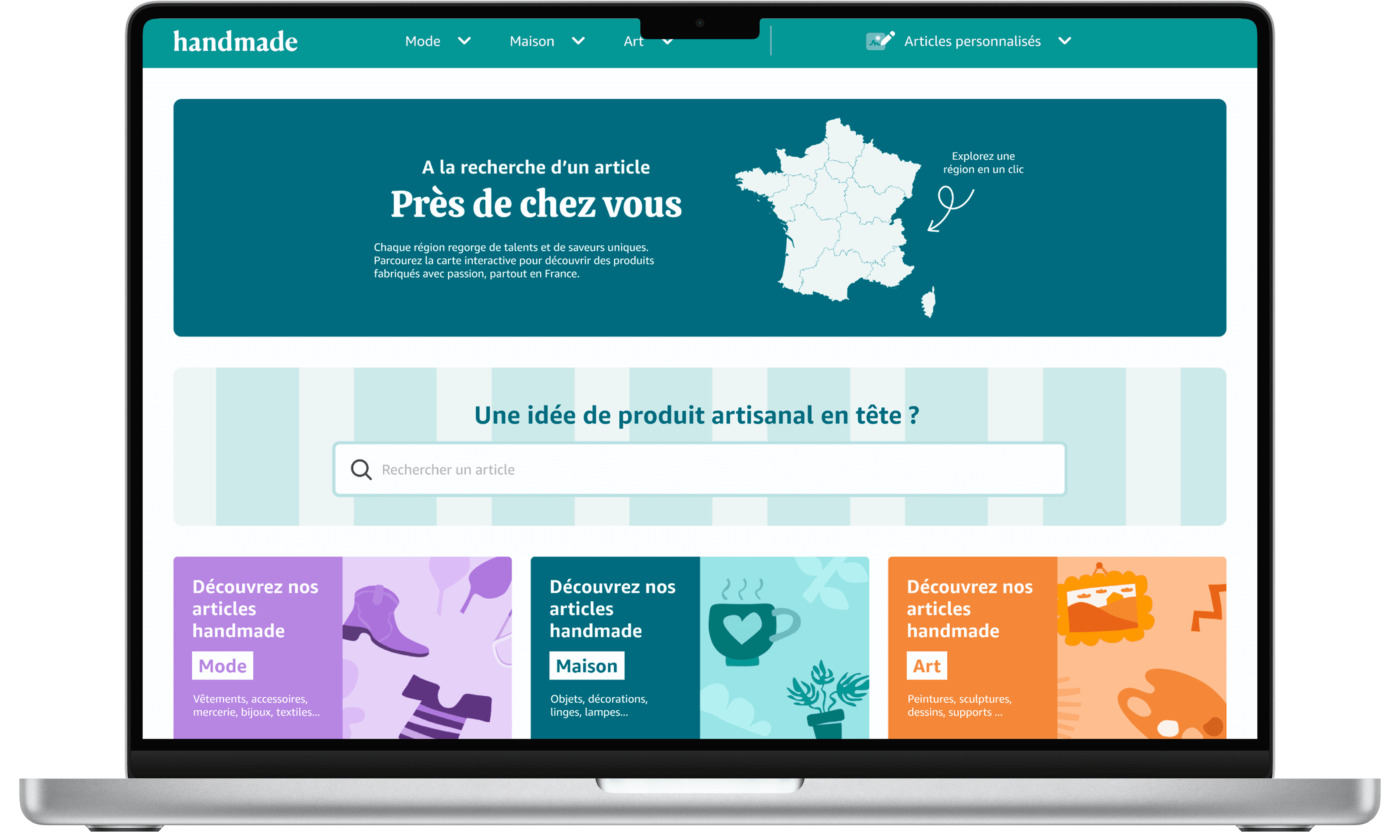
Desktop homepage
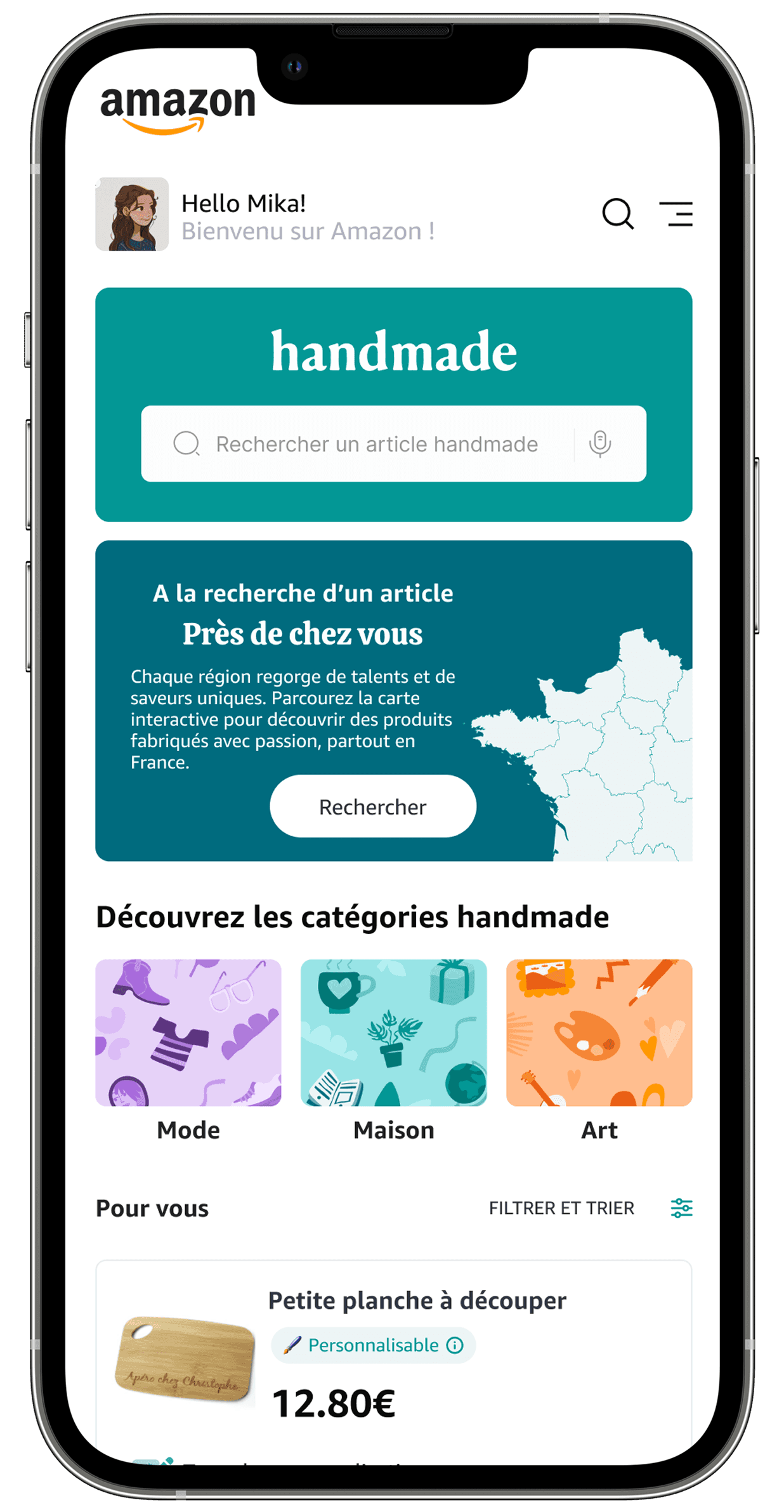
Mobile homepage
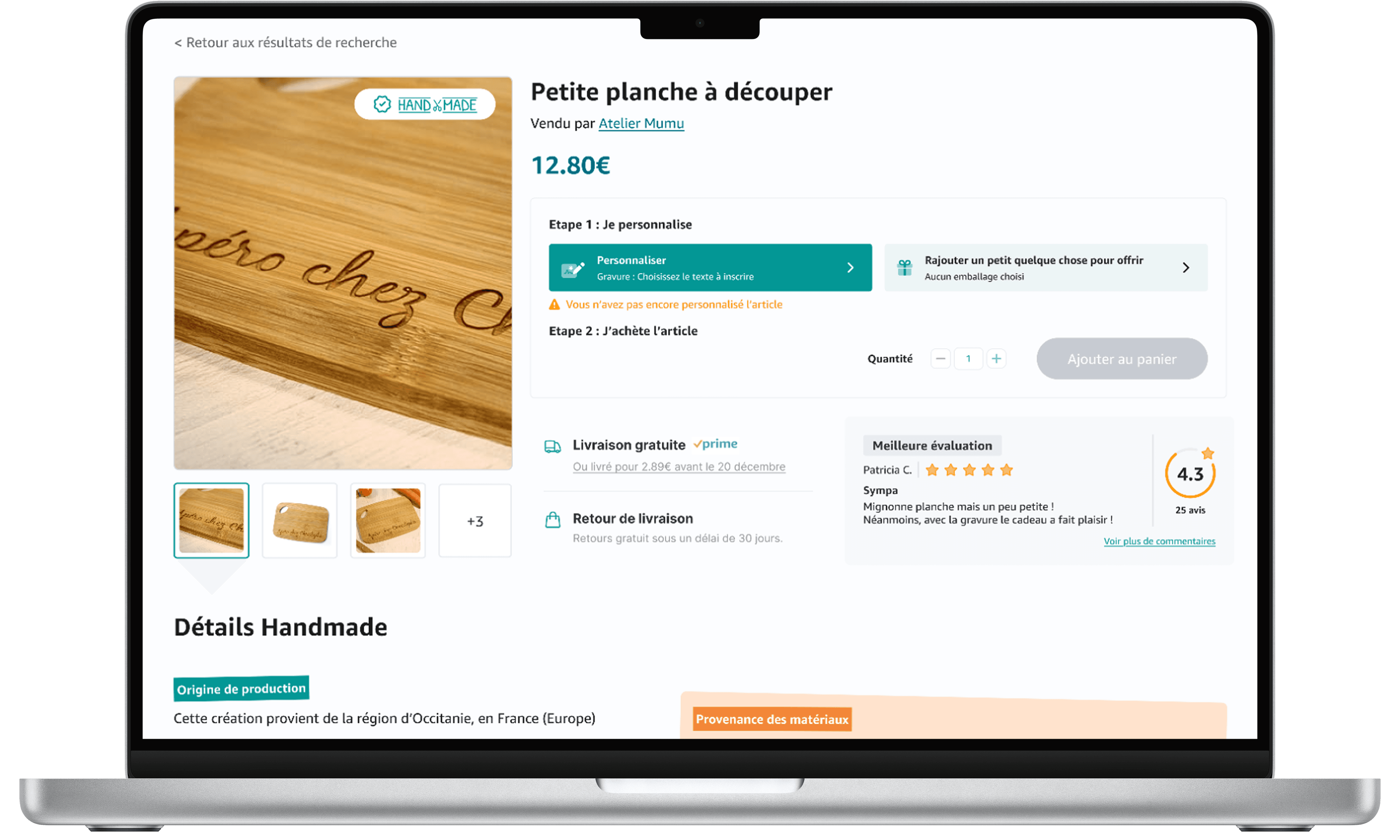
Product page

Artisan vendor page
This project highlighted the gap between Amazon’s strengths in mass e-commerce, and the needs of artisan-driven shopping.
Throughout our research and design process, we were faced with several obstacles and limitations :
The platform evolves constantly, making it difficult to design for a stable reference.
Distinguishing between handmade and customisable proved more complex than expected.
Our desktop-first approach limited flexibility, and a mobile-first iteration would be essential in practice.
Finally, we learned that making handmade attractive to younger audiences requires not only functional filters, but also aesthetic cues and authentic storytelling.
Our work suggests that the key lies in making handmade visible, personal, and trustworthy again.